Warm vs. Cool Lighting: Which is Best for Your Home?
- mkelleherconsultan
- Feb 22, 2025
- 2 min read

Lighting plays a crucial role in shaping the ambience of a home. Whether you want a cosy and inviting space or a bright and energising environment, the type of lighting you choose makes all the difference. One of the most debated topics in interior design is the choice between warm and cool lighting. Each has its benefits, and understanding them can help you make the best decision for your space.
What is Warm and Cool Lighting?
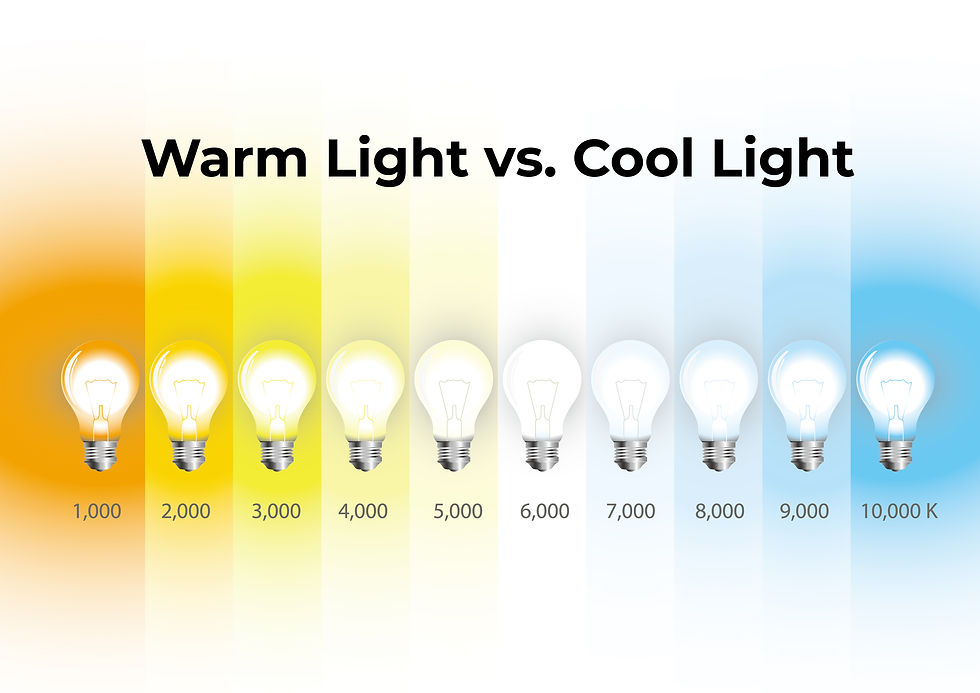
Warm and cool lighting is determined by the colour temperature of a light source, measured in Kelvin (K). The lower the Kelvin number, the warmer the light appears, while higher Kelvin numbers create cooler, bluish light.
Warm light (2700K – 3000K): This light has a yellow-orange hue, similar to candlelight or traditional incandescent bulbs. It creates a cosy and comfortable atmosphere.
Cool light (4000K – 6500K): This light appears white to bluish-white, resembling daylight or fluorescent lighting. It promotes alertness and concentration.

Where to Use Warm Lighting
Warm lighting is ideal for spaces meant for relaxation and socialisation, such as:
Living Rooms: Enhances a cosy, welcoming atmosphere for unwinding or entertaining guests.
Bedrooms: Helps promote relaxation and better sleep by mimicking the glow of sunset.
Dining Areas: Creates an inviting space for meals and conversations.
Where to Use Cool Lighting
Cool lighting works best in areas where clarity and focus are needed, including:
Kitchens: Ensures a bright, clean environment for cooking and meal preparation.
Bathrooms: Provides crisp lighting for grooming tasks like shaving and applying makeup.
Home Offices & Study Areas: Helps with concentration and productivity by mimicking natural daylight.
Choosing the Right Lighting for Your Home
While the general rule is warm lighting for relaxation and cool lighting for tasks, many homes benefit from a combination of both. Consider using adjustable lighting such as dimmable LED bulbs or smart lighting systems to switch between warm and cool tones as needed. Layering different light sources, such as pendant lights, table lamps, and recessed lighting, also creates a balanced effect.
Conclusion
There is no one-size-fits-all answer when it comes to warm vs. cool lighting. The best choice depends on the function of each space and the ambience you wish to create. By understanding how different lighting temperatures impact a room, you can tailor your home’s lighting to enhance both comfort and functionality.
Do you prefer warm or cool lighting in your home? Let us know in the comments!



Comments